How to Build an Earthquake Proof House, and Retrofit the One You Have
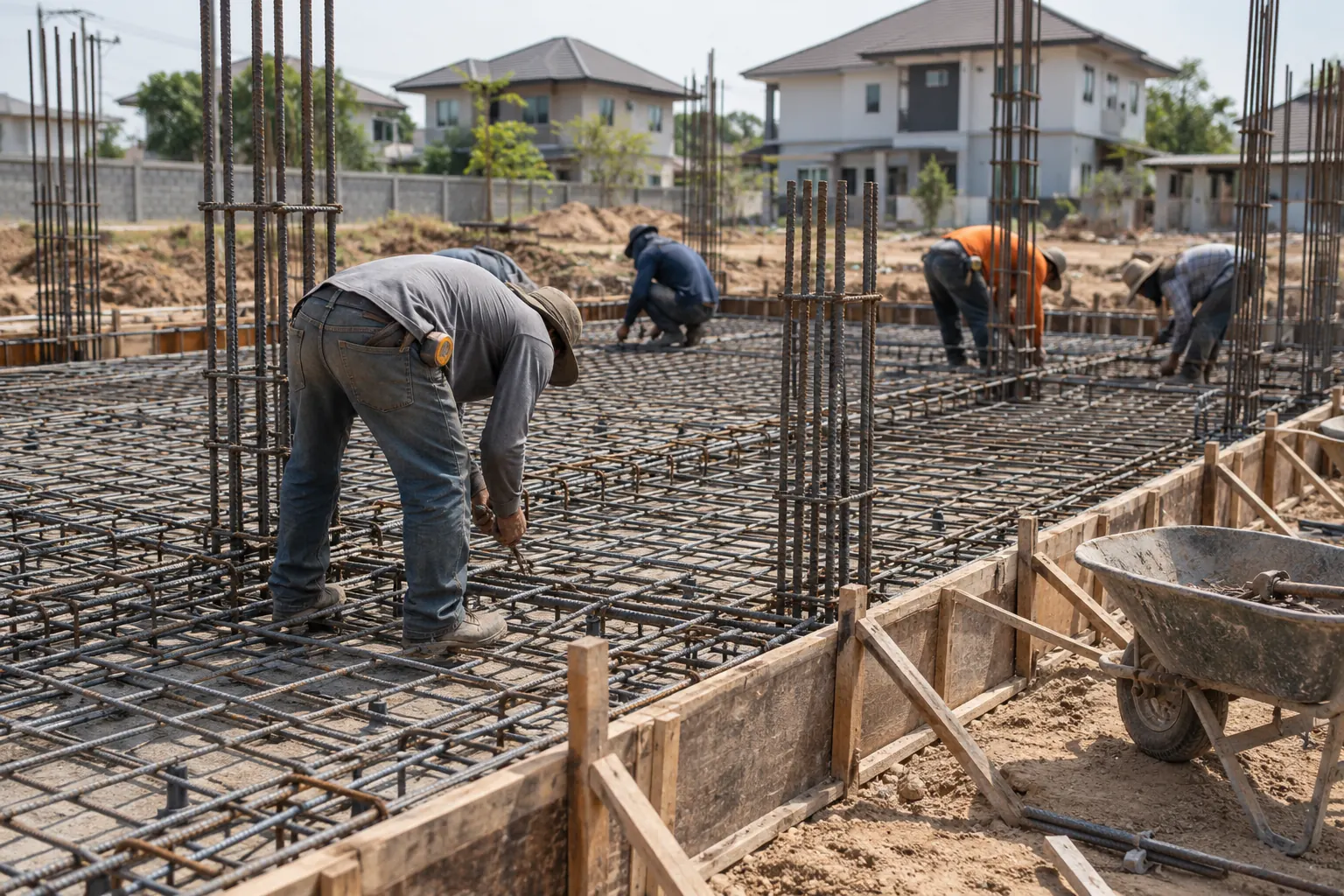
People search for an earthquake proof house. Engineers design earthquake resistant ones. The difference matters, because the honest answer to "how do I build a house that survives an earthquake" starts with what the building codes actually promise, and what they do not.
This guide covers both jobs: building a new house in an earthquake region, and making an existing house safer. It is written for readers in California and the rest of the US, Japan, Türkiye, New Zealand and anywhere else that shakes. Every number below is tied to a public source listed at the end.
Earthquake proof vs earthquake resistant
No house is earthquake proof. FEMA says so plainly in its guide to the US seismic provisions, FEMA P 749: "If subjected to strong enough ground shaking, any structure would collapse."
What codes aim for is life safety. The same document explains that US buildings "are designed with the intent that they protect life safety but can experience significant damage" in design level shaking, and may even be damaged beyond repair. For the rare, very strong shaking the code calls the maximum considered earthquake, the target is a small probability of collapse, on the order of 10 percent or less for ordinary buildings.
Eurocode 8 frames it the same way with two requirements: a no collapse requirement for a rare event (a 475 year return period is the recommended reference for ordinary structures) and a damage limitation requirement for more frequent shaking.
So a code compliant house is built to keep you alive. Whether it is still livable afterwards depends on choices above the minimum, and many of them are easiest to make at the design stage.
What makes a house earthquake resistant: the principles
In an earthquake the ground moves sideways. The mass of the house resists that movement, and the resistance shows up as horizontal force that has to travel from the roof, down through the walls, into the foundation and out into the soil. FEMA P 749 lists the features a structure needs to handle that: stable foundations, continuous load paths, adequate stiffness and strength, redundancy, regularity, ductility and toughness, and separation from neighboring buildings. For a house, they boil down to six ideas.
A continuous load path
Most failures you see in earthquake photos are a break in the load path: the roof separating from the walls, the walls sliding off the sill plate, the house stepping off its foundation. The first question about any house is whether you can trace an unbroken, fastened path from the ridge to the footing. If you cannot, stronger materials will not fix it.
Light mass
Earthquake force grows with weight. A heavy tile roof or thick masonry walls attract more force than a light roof and framed walls. FEMA notes that light frame houses tend to have a high strength to weight ratio, which is a large part of why they usually perform well.
Regularity
A regular building sways in a uniform manner. When the center of mass and the center of stiffness do not line up, the house twists during shaking, and the corner furthest from the center of rotation fails first. L, T and U shaped plans do this by geometry. If the design needs such a plan, a seismic separation joint lets each wing respond on its own. In elevation, strength and stiffness should not drop sharply from one story to the next.
Ductility
Ductility is the ability to bend a long way while still carrying load. Steel yields and stretches before it breaks; unreinforced masonry and plain concrete crack and let go. In wood framing, the nails, bolts and straps are the ductile part: FEMA explains that these steel fasteners yield and protect the wood from splitting and crushing.
Redundancy
If all the lateral strength sits in one wall, losing that wall means losing the house. Many walls spread along both directions give the structure a backup. FEMA's phrase for it is "not putting all of your earthquake resistant eggs in one basket."
Connections
In light frame construction the members rarely break. The connections let go. Most of this guide is really about connections, because that is where FEMA's retrofit guidance focuses and where many of the standard fixes sit.
1. Site and soil come before the design
Soil changes the shaking. FEMA P 749 shows that sites on near surface rock tend to shake less than firm or soft soil sites, and that softer soils spread strong shaking over a wider range of building periods. Two identical houses a mile apart can see very different demands.
US codes sort sites by the average shear wave velocity of the top 30 meters (100 feet) of ground. The 2022 edition of ASCE 7 runs from Site Class A, hard rock, through intermediate classes to Site Class F, soils that need a site specific study. Eurocode 8 uses ground types A to E plus two special types, S1 and S2, with S2 covering liquefiable soils. Türkiye's building code, TBDY 2018, uses soil classes ZA to ZF.
Beyond amplification, three site conditions deserve a direct look.
- Liquefaction. The USGS describes it as loosely packed, water logged sediments at or near the surface losing their strength in strong shaking. The house may be fine; the ground under it is not. New Zealand's acceptable solution for timber houses now explicitly excludes land prone to liquefaction and lateral spread from its definition of "good ground".
- Fault proximity. No house is designed to straddle a fault that ruptures at the surface. Setback is the only mitigation. California's Alquist Priolo Act says a structure for human occupancy cannot be placed over an active fault and must be a minimum distance from it, generally fifty feet, and sellers must disclose when a fault zone affects the property.
- Slopes. Hillside lots add landslide risk and the structural complication of tall, stepped foundations and cripple walls.
Useful starting points: in Türkiye, AFAD's earthquake hazard map shows peak ground acceleration values for a specific location instead of the old broad zones, and it came into force on 1 January 2019 alongside TBDY 2018. In the US, your local building department and a geotechnical report give the site class and hazard values the design must use. Treat the geotechnical report as the input that decides everything after it.
2. Foundation and anchorage
An earthquake proof house foundation has two jobs: carry the weight without settling unevenly, and pass large horizontal forces between house and ground without letting the house slide or overturn. On most sites that means a continuous reinforced concrete perimeter foundation, or a mat, tied into the framing above.
The tie matters as much as the concrete. FEMA's guide shows a house that fell off its foundation in the 1989 Loma Prieta earthquake, and notes that light frame houses "can slide off their foundations" if the connection is inadequate.
In the US, the International Residential Code (IRC) sets the baseline. As summarized by the American Wood Council, sill plates are anchored with 1/2 inch anchor bolts embedded 7 inches into concrete, spaced no more than 6 feet apart, with a bolt within 12 inches of each plate end. In the higher Seismic Design Categories (D0, D1, D2), larger 3 by 3 inch plate washers are required so the sill cannot split around the bolt.
Anchor bolts stop sliding. Hold downs stop overturning. A shear wall pushed sideways tries to lift at one end, and a hold down is the steel connector that ties the end of that wall to the foundation or to the wall below.
Japan saw the same failure in the 2016 Kumamoto earthquakes. The government's investigation found that every collapsed house built to the 1981 standard that investigators could check failed to meet the connection details clarified in 2000.
3. Wall bracing and shear walls
Walls resist sideways force when they are sheathed and nailed properly. In wood frame houses, that means plywood or OSB panels with a specific nailing pattern, forming shear walls. The IRC's wall bracing rules set how much braced wall length each story needs and where it goes; New Zealand's NZS 3604 does the same through its bracing design section.
Three rules of thumb apply to most houses:
- Put bracing on both axes, near the perimeter, and spread it out. A house braced heavily on three sides and open on the fourth will twist.
- Stack walls over walls. Bracing that does not continue down to the foundation breaks the load path.
- Watch the big openings. A wall of glass or a double garage door removes bracing exactly where the plan tends to need it.
The connections that make this work, from the ground up:
| Connection | Failure if missing |
|---|---|
| Anchor bolts, sill plate to foundation | House slides off the foundation |
| Cripple wall bracing | Crawl space walls rack or collapse, house drops |
| Hold downs at shear wall ends | Wall overturns instead of resisting shear |
| Sheathing nailing pattern | Shear wall loses capacity long before the lumber does |
| Floor and roof diaphragm to wall | Diaphragm cannot deliver force to the walls; walls act alone |
| Roof framing to top plate | Roof separates and drops |
4. Cripple walls and soft stories
What is a cripple wall? FEMA's homeowner guide, FEMA P 530, defines it as "a short, flexible wood foundation wall" on the first floor, found in houses whose floor is raised above the ground over a crawl space. A cripple wall house sits on those short stud walls, which sit on the concrete foundation.
Unsheathed cripple walls are weak in exactly the direction an earthquake pushes. FEMA puts it this way: inadequately anchored homes can slide off their foundations, and inadequately braced cripple walls can rack sideways, "causing significant damage and potentially collapse." The fix is to bolt the sill to the foundation and cover the cripple wall studs with structural panels.
What is a soft story? FEMA defines it as a story with substantially less strength and stiffness than the stories above. In houses it is usually living space over a garage, or a ground floor opened up with glass. The upper floors stay stiff while the weak level absorbs the movement. That is why California's residential retrofit grants include a separate program for houses with living space over a garage, and why, as FEMA notes, communities such as San Francisco and Los Angeles have adopted laws requiring retrofit of buildings with this condition.
A related concrete version is the short column effect, where partial height infill leaves a short stub of column exposed. That stub attracts far more shear than it was designed for and fails in a brittle way.
5. Roof and chimney
A lighter roof means less force for everything below to resist. The roof also has to be fastened to the walls and act as a diaphragm that hands force to the shear walls.
Chimneys are a common weak point in otherwise sound houses. FEMA notes that masonry chimneys "are frequently damaged and can collapse in moderate to large earthquakes," and that older ones are particularly vulnerable. New Zealand's Natural Hazards Commission Toka Tū Ake says older unreinforced brick and concrete masonry chimneys can seriously damage homes and harm people, that full removal eliminates the risk, and that restraints anchoring the chimney to the house reduce it when removal is not yet possible. In New Zealand, chimneys built since 1985 should have a reinforced concrete flue within the brickwork and be tied to the framing.
Earthquake proof house materials, compared honestly
FEMA's list of key design features is about configuration and connection rather than any one material. Still, each system has a typical behavior worth knowing.
| System | How it tends to behave | What decides the outcome |
|---|---|---|
| Wood frame | Light, many walls, redundant. FEMA calls typical light frame performance "outstanding"; damage is often cracked drywall and stucco | Anchorage, sheathing, cripple walls, hold downs |
| Cold formed steel frame | Treated with wood in the same light frame family by FEMA; light and ductile | Same as wood: connections and bracing |
| Reinforced masonry | Heavier. The reinforcing steel yields and carries load, protecting the masonry from brittle failure | Grouted, fully reinforced walls; ties to floors and roof |
| Reinforced concrete | Heavy. Performs well when detailed for ductility, badly when not | Confinement, strong column weak beam, inspection |
| Structural steel frame | Ductile, but rare for single houses and needs engineered connections | Connection design and bracing |
| Unreinforced masonry | Heavy and brittle. FEMA says it frequently collapses and has long been prohibited where strong shaking is likely | Avoid for new work; retrofit or replace existing |
| Adobe | Massive walls with little strength; walls "will crack during moderate to large earthquakes" (Ginell and Tolles) | Stability measures such as straps, rods and bond beams |
If the house is concrete, ductility comes from detailing rather than from strength:
- Confinement at column ends. Closely spaced ties with properly bent hooks at the top and bottom of each column. This is the detail most often shortchanged.
- Strong column, weak beam. Plastic hinges should form in the beams, not the columns. Hinging in beams is survivable; hinging in columns is a collapse mechanism.
- Beam column joint reinforcement. The joint carries the force transfer between members. Unreinforced joints shear apart.
- Anchorage and splice lengths. Reinforcement that is not properly developed does not count.
All four are drawing decisions that cost little in material. When they go wrong, the cause is usually poor detailing and poor site inspection rather than the budget.
Building codes by country
United States. The IRC covers detached one and two family dwellings and townhouses up to three stories above grade plane. Other buildings fall under the International Building Code. FEMA explains that US codes adopt their seismic design requirements through ASCE 7, and that the 2022 edition is adopted by the 2024 International Building Code. Existing buildings are covered by the International Existing Building Code, and engineers evaluate them with ASCE 41.
Europe. Eurocode 8 Part 1 (EN 1998 Part 1) covers buildings, with each country setting its hazard values in a National Annex.
Japan. The Building Standard Law was tightened in June 1981, the "shin taishin" (new earthquake resistance) standard, which raised the required amount of bracing walls. In 2000 the connection details for wooden houses were clarified. The 2016 Kumamoto earthquakes tested all three generations. In the Architectural Institute of Japan's survey of central Mashiki town, as reported by the Ministry of Land, Infrastructure, Transport and Tourism (MLIT), provisional figures showed:
| Wooden houses built | Houses surveyed | Collapsed |
|---|---|---|
| Up to May 1981 (old standard) | 759 | 214 (28.2%) |
| June 1981 to May 2000 | 877 | 76 (8.7%) |
| June 2000 onwards | 319 | 7 (2.2%) |
The same report notes that of 16 houses in the survey area rated seismic grade 3 under Japan's housing performance labeling system, 14 had no damage and 2 had slight damage. Grade 3 means the house resists 1.5 times the force that the Building Standard Law minimum (grade 1) is designed for. That is strong public evidence that building above the code minimum pays off in a house.
Türkiye. The Turkish Building Earthquake Code, TBDY 2018, took effect on 1 January 2019. Chapter 14 covers seismically isolated buildings and Chapter 15 covers assessment and strengthening of existing buildings.
New Zealand. Most houses are built under the acceptable solution for Building Code clause B1 Structure, which references NZS 3604 for timber framed houses and small buildings, including its bracing design rules.
How to earthquake proof your house if it already exists
You cannot change the configuration of an existing house, but you can find its weak points and fix the cheap ones first. For wood frame houses, FEMA's retrofit guideline FEMA P 1100, prepared by the Applied Technology Council for the California Earthquake Authority and FEMA, targets four known vulnerabilities: crawlspace dwellings, living space over garage dwellings, hillside dwellings and masonry chimneys. It is candid that its provisions improve performance but are "not intended to prevent earthquake damage."
- Check the foundation connection. In the crawl space, look for anchor bolts through the sill plate. FEMA P 530 flags a house as vulnerable when bolts are not visible, badly deteriorated, or spaced more than 6 feet apart.
- Check the cripple walls. If the short stud walls have no plywood or OSB sheathing, they need bracing.
- Look for a soft story. The usual signs are a garage or wide glazing under living space, with little bracing at that level.
- Look at the chimney. An older unreinforced masonry chimney is a life safety hazard.
- Do the nonstructural work. Most of it is a weekend project (see below).
Bolt and brace. The standard retrofit for a raised floor house bolts the wood frame to the foundation, braces the cripple walls with plywood or OSB, and straps the water heater. In California, the Earthquake Brace + Bolt program run by the California Residential Mitigation Program offers grants of up to $3,000 toward this work for wood frame houses built before 1980 on a raised foundation, with extra funding for income eligible homeowners. It is funded by the California Earthquake Authority and FEMA's Hazard Mitigation Grant Program.
Soft story retrofit. For houses with living space over a garage, the same organization runs the Earthquake Soft Story program for houses built before 2000, reimbursing up to 75% of the retrofit cost, up to $13,000, for work done to FEMA P 1100 by a listed contractor. Grants depend on ZIP code and open enrollment periods, so check current terms before planning around one.
Outside California. In Japan, the practical first step for a wooden house built before June 1981 is a seismic diagnosis by a qualified professional; your city office can tell you what local support exists. In Türkiye, a single owner can apply to a ministry licensed institution for a risky building assessment under Law 6306, and the result is a yes or no finding. In New Zealand, the Natural Hazards Commission advises getting a licensed building practitioner or engineer involved for subfloor bracing, particularly where the subfloor is more than 600 mm above ground or the perimeter foundation wall is not continuous.
For concrete and masonry houses, retrofit options range from jacketing columns to adding shear walls. We compare them in building strengthening methods. For anything beyond the standard prescriptive fixes, an engineer's evaluation under ASCE 41 or your national equivalent gives a real answer rather than a guess.
Nonstructural safety: water heaters, gas lines and furniture
A house can come through structurally sound and still hurt the people inside it. FEMA P 530 says unbraced water heaters and inflexible gas and water connections are relatively inexpensive to fix and "should be the highest priority." On the water heater page it simply says: "If you don't do anything else, do this!" A falling tank can break gas lines and start a fire, flood the house, or damage the flue and let carbon monoxide build up.
California makes it law. Health and Safety Code section 19211 requires all new, replacement and existing residential water heaters to be braced, anchored or strapped against earthquake motion.
- Strap the water heater to the wall studs with a seismic kit, and fit flexible gas and water connections
- Anchor tall furniture, bookcases and wardrobes to studs, not to drywall, especially near exit routes
- Put latches on upper cabinets, particularly in the kitchen
- Secure televisions, computers and other heavy electronics
- Keep heavy mirrors and framed art away from beds and seating
- Store heavy items low
None of this needs an engineer, and it covers what FEMA calls the highest priority.
Where base isolation fits for a house
Base isolation separates a building from the ground with flexible bearings so that much less of the shaking reaches the structure. We explain the mechanism in what is seismic isolation. It performs better than anything else in this guide, and single family houses almost never use it.
Japan is the exception, and its numbers make the same point. Data collected by the Japan Society of Seismic Isolation from its members counts 4,752 isolated detached houses planned through 2022. Annual numbers peaked in the mid 2000s, with more than 500 a year in 2005 and 2006, then fell away; the members reported none for 2020, 2021 or 2022.
The reasons are practical. An isolated house needs a rigid base above the bearings, a clear gap around the building so it can move, and flexible connections for every pipe and cable that crosses that gap. In practice those items do not shrink much with the size of the building, so the premium weighs heaviest on small ones. For most families the same money buys more safety through the site choice, connections, bracing and nonstructural work above.
Isolation earns its place where continued operation matters after the earthquake or where the contents are worth far more than the structure: hospitals, emergency facilities, data centers and larger residential buildings. If you are wondering whether an existing building could take it, see can isolators be added to existing buildings.
Checklist before you build or buy
- Is there a geotechnical report, and what site class or soil class does it give?
- Is the lot in a liquefaction, landslide or fault zone? In California, check the seller's natural hazard disclosure.
- Which code edition was the house designed to? In Japan, is the building confirmation dated June 1981 or later, ideally June 2000 or later? In Türkiye, was it designed under TBDY 2018?
- Is the plan reasonably regular, with bracing on all four sides and walls stacked over walls?
- Is there living space over a garage or a wide glass wall at ground level?
- In a raised floor house: are the sill bolts visible and are the cripple walls sheathed?
- For concrete: are the column ties closely spaced at the ends, and was construction inspected?
- Is the roof light, and is any masonry chimney reinforced, braced or gone?
- Is the water heater strapped, with flexible gas connections?
- For new construction in Japan, can you get seismic grade 3 rather than the minimum?
Conclusion
Material alone does not make a house earthquake resistant. What does is a site assessed honestly, a plan without twist or a soft story, a load path that is fastened at every joint, and contents that stay put. For an existing house, the fixes follow the same order and the cheapest ones come first: bolts, cripple wall bracing, the water heater and the chimney.
If you are planning a project in a seismic region and want an independent review of the structural decisions before they are locked in, see our consulting page or book a call.
Frequently Asked Questions
Is there such a thing as an earthquake proof house?
No. FEMA states that any structure would collapse under strong enough shaking. Building codes aim for life safety: a house built to code should protect the people inside, but it may be badly damaged, sometimes beyond repair. Building above the minimum, such as Japan's seismic grade 3, reduces damage further.
What makes a house earthquake resistant?
A continuous, fastened load path from roof to foundation, a light and regular structure, bracing walls spread on both axes, ductile connections, no soft story, and a good site. Securing the water heater and heavy furniture protects the people inside.
What is the best material for an earthquake resistant house?
No material is safe on its own. Well connected wood frame houses usually perform very well because they are light and have many walls. Reinforced concrete and reinforced masonry perform well when detailed for ductility. Unreinforced masonry and unreinforced adobe are the most dangerous choices.
What is a cripple wall?
It is a short wood stud wall between the concrete foundation and the first floor of a house built over a crawl space. Without plywood or OSB sheathing and anchor bolts, cripple walls can rack sideways and let the house drop or slide off its foundation. Bracing and bolting them is the standard retrofit.
How do I make my existing house earthquake resistant?
Start with the cheap, high value fixes: strap the water heater and fit flexible gas lines, bolt the sill plate to the foundation, brace any cripple walls, and deal with an old masonry chimney. Then check for a soft story over a garage. In California, the Earthquake Brace + Bolt program offers grants of up to $3,000 for eligible houses.
What foundation is best for an earthquake resistant house?
A continuous reinforced concrete foundation on competent soil, with the framing bolted to it and hold downs at the ends of shear walls. On liquefiable or soft ground the foundation needs a geotechnical engineer's design, which may mean a mat or deep foundations.
Is base isolation worth it for a house?
Rarely. It is used for detached houses mainly in Japan, and even there the number built each year has fallen to almost none according to Japan Society of Seismic Isolation data. For most homes, site choice, connections, bracing and nonstructural work give more safety for the money.
Sources
- FEMA P 749, Earthquake Resistant Design Concepts: An Introduction to Seismic Provisions for New Buildings (2022): code intent, key design features, site class, light frame performance. fema.gov
- FEMA P 530, Earthquake Safety at Home (March 2020): cripple walls, water heaters, chimneys, priorities. PDF copy · ATC
- FEMA P 1100, Vulnerability Based Seismic Assessment and Retrofit of One and Two Family Dwellings. fema.gov · ATC
- California Residential Mitigation Program, Earthquake Brace + Bolt retrofit. crmp.org
- California Residential Mitigation Program, Earthquake Soft Story retrofit. crmp.org
- American Wood Council, IRC anchorage requirements for wood sill plates (IRC R403.1.6). awc.org
- International Residential Code, section R101.2 scope, as adopted by the City of Sioux Falls (2021 IRC). siouxfalls.gov
- USGS, What is liquefaction? usgs.gov
- California Geological Survey, Alquist Priolo Earthquake Fault Zones. conservation.ca.gov
- California Health and Safety Code section 19211, water heater strapping. law.justia.com
- City of Los Angeles, Department of Building and Safety, Soft Story Retrofit Program. dbs.lacity.gov
- E. Carvalho, Eurocode 8: General rules and seismic actions, European Commission JRC Eurocodes workshop (2008): fundamental requirements and ground types. eurocodes.jrc.ec.europa.eu
- MLIT, report of the committee analyzing building damage in the 2016 Kumamoto earthquakes, summary (30 September 2016), in Japanese. mlit.go.jp press release · summary PDF
- MLIT, housing performance labeling system guide (seismic grades 1 to 3), in Japanese. mlit.go.jp
- Japan Society of Seismic Isolation (JSSI), isolated and damped building statistics, data through 2022, in Japanese. jssi.or.jp
- Türkiye Bina Deprem Yönetmeliği (TBDY 2018), Resmî Gazete, 18 March 2018. resmigazete.gov.tr
- AFAD, Türkiye Earthquake Hazard Map. afad.gov.tr
- Implementing regulation of Law 6306 on the transformation of areas under disaster risk, in Turkish. mevzuat.gov.tr
- New Zealand Ministry of Business, Innovation and Employment, Acceptable Solution B1/AS1 (NZS 3604 modifications, good ground definition). building.govt.nz
- Natural Hazards Commission Toka Tū Ake, Hazardous chimneys. naturalhazards.govt.nz
- Natural Hazards Commission Toka Tū Ake, Your home's foundations. naturalhazards.govt.nz
- W. S. Ginell and E. L. Tolles, "Seismic Stabilization of Historic Adobe Structures", Journal of the American Institute for Conservation 39(1), 2000. cool.culturalheritage.org
Similar Articles
How Long Does a Reinforced Concrete Building Last?
Concrete buildings do not expire, they corrode at a rate set by cover, mix design and exposure. What governs service life, how...
Read articlePreparednessEarthquake Preparedness: What to Do, in the Right Order
Preparedness starts with the building, not the kit. Structure, securing contents, household plan and supplies, plus what US...
Read articleDecision GuideWhen Does a Building Need Seismic Isolation? 5 Deciding Factors
The 5 factors that decide whether a building needs seismic isolation: site hazard, building function, structure type, new...
Read article