Earthquake Risk in Istanbul: What Property Owners Should Know
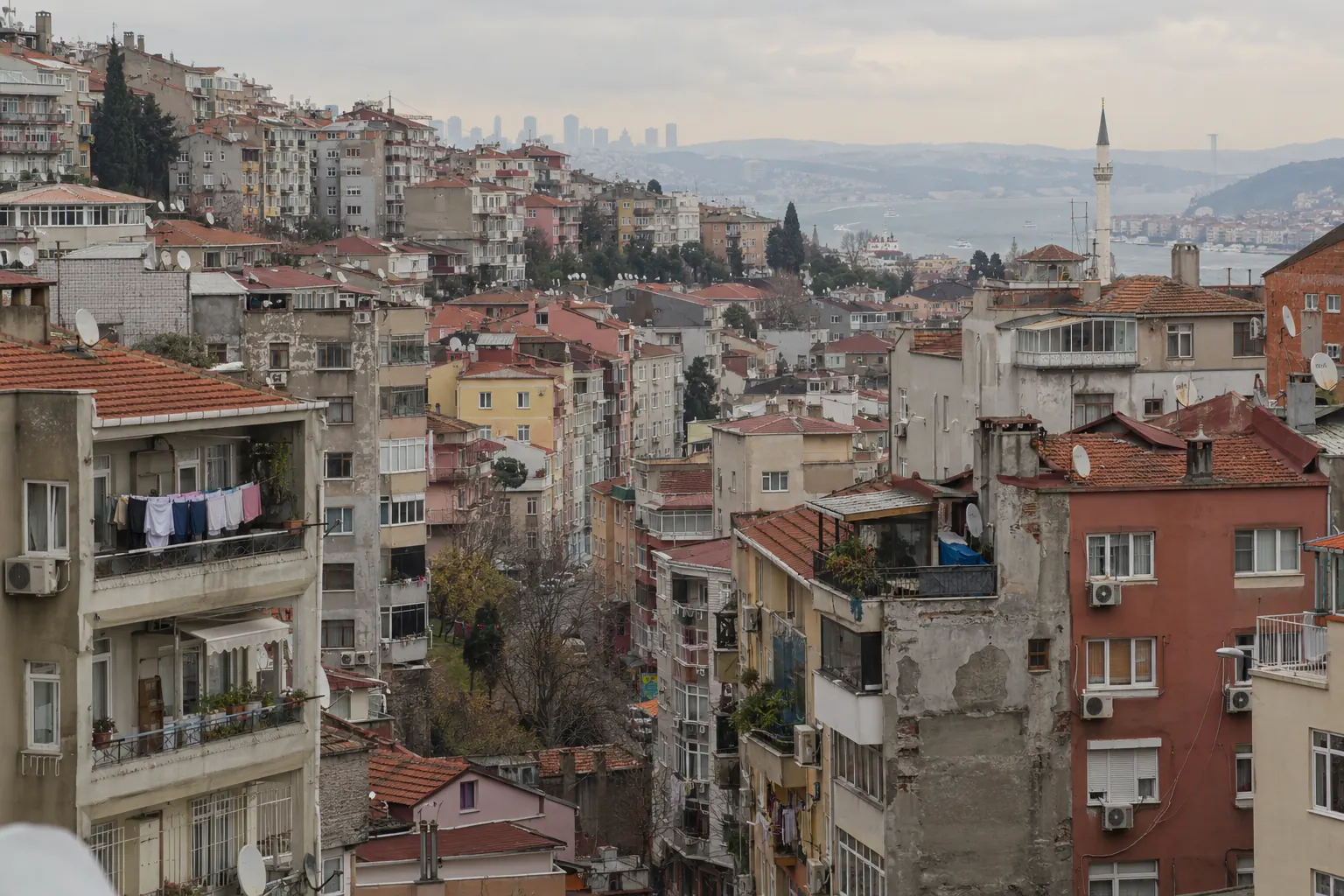
Istanbul sits close to the North Anatolian Fault, one of the most studied strike slip fault systems in the world, and the seismic question there is not whether but when. If you own property in the city, are buying, or are planning a project, this covers what the risk actually looks like and what can be done about it.
The hazard
The North Anatolian Fault runs east to west across northern Turkey and continues beneath the Sea of Marmara, south of Istanbul. Over the twentieth century it produced a westward progression of major earthquakes, each loading the next segment. The 1999 Izmit earthquake (Mw 7.4, around 17,000 deaths) was the most recent large event on the sequence.
The widely cited probabilistic estimate comes from Parsons and colleagues (2004), which put the likelihood of an M7 or greater event affecting the Istanbul region at roughly 62 percent, plus or minus 15 percent, over the 30 years from 2004. More than two thirds of that window has now elapsed without the event occurring, which does not reduce the remaining hazard.
Note that the fault runs offshore, beneath the Marmara Sea, rather than through the city itself. That distinction matters: surface rupture through built up districts is not the expected failure mode. Strong ground shaking across the whole metropolitan area is.
Why the district matters: ground conditions
Ground motion is not uniform across the city. Soil amplifies shaking, and soft, deep deposits can multiply bedrock motion several times over while shifting energy toward the periods where midrise buildings respond hardest.
Turkish practice classifies sites from ZA (hard rock) through ZF (soils requiring site specific investigation, including liquefiable soils). Broad patterns across Istanbul:
- Coastal and reclaimed areas along the Marmara shore generally sit on softer alluvial deposits with higher amplification potential, and some carry liquefaction risk.
- Northern and inland districts more often sit on stiffer ground.
- Slope areas add landslide considerations on top of shaking.
These are tendencies, not a substitute for site data. Conditions vary sharply over short distances, and the site investigation report for a specific parcel is the only thing that answers the question for that parcel.
The building stock is the actual problem
Istanbul's seismic risk is dominated less by the hazard than by what was built before it was properly regulated.
The turning point is the modern ductile detailing requirement. Buildings permitted before 2000 commonly lack the detailing that makes a concrete frame deform without collapsing: closely spaced confinement reinforcement at column ends, adequate beam column joint reinforcement, and a strong column, weak beam proportioning that prevents a storey mechanism. The current code, TBDY 2018, is a further step and applies to permits from 2019 onward.
Three configuration problems recur across the city's older stock:
- Soft storey. A ground floor opened up for shops or parking beneath infilled residential floors. The upper structure stays rigid and the ground floor absorbs the entire displacement demand.
- Short column. Partial height infill leaves a stub of column exposed, which attracts far more shear than it was designed for and fails in a brittle mode.
- Unauthorised modification. Structural walls removed, columns cut or drilled through during renovation, storeys added without permit. This is widespread and often invisible from outside the unit.
What an owner can actually do
Establish the facts first
- Permit year. This places the building in a code era and is the single most informative data point.
- Soil investigation report. Whether one exists and what site class it found.
- Structural drawings. Not the architectural set. Look at how shear walls are distributed in plan.
- History of modifications. Ask the building management and the other owners directly.
Then, if warranted, assess formally
Two distinct processes exist and they are often confused:
- Risky building determination under Law 6306. Applied for through ministry licensed organisations. A single owner's application is sufficient. The result is binary: the building is risky or it is not.
- Performance assessment under TBDY 2018 Chapter 15. A fuller engineering study that establishes what performance the building achieves at a given earthquake level, and it is the input to any strengthening design.
Note that since November 2023 the decision to rebuild or strengthen a risky building requires a simple majority of ownership share, reduced from the previous two thirds threshold. Buildings where the process stalled for want of a two thirds majority can be revisited.
Where seismic isolation fits in Istanbul
Base isolation is the highest performance option available, and it is used in Turkey: the Sabiha Gökçen airport terminal, completed in 2009 on roughly 300 triple friction pendulum bearings, was the largest seismically isolated building in the world when it opened.
For a residential building it is usually not the right instrument. Isolation requires a defined isolation level, a clear moat around the structure, flexible utility crossings, and enough mass for the period shift to be meaningful. It earns its cost where operation after the event matters or where contents exceed the structure in value: hospitals, data centres, laboratories, and large mixed use developments.
For most Istanbul apartment buildings, money goes further in a proper assessment followed by targeted strengthening, or in redevelopment where the structure does not justify further investment.
Conclusion
The hazard in Istanbul is well characterised and not in dispute. The variable is the building: which code era it belongs to, what the ground under it does, and what has been done to its structure since it was built. Those three answers, in that order, tell you your actual exposure, and none of them require guessing.
If you want an independent read on a specific building rather than a district level generalisation, book a call.
Frequently Asked Questions
How likely is a major earthquake in Istanbul?
The widely cited estimate from Parsons and colleagues (2004) put the probability of an M7 or greater event affecting the Istanbul region at roughly 62 percent plus or minus 15 percent over the 30 years from 2004. More than two thirds of that window has elapsed, which does not reduce the remaining hazard.
Which districts of Istanbul are most at risk?
Ground conditions vary sharply over short distances, so district level generalisations are unreliable. Broadly, coastal and reclaimed areas along the Marmara shore sit on softer deposits with higher amplification and some liquefaction potential, while northern and inland areas more often sit on stiffer ground. The site investigation report for a specific parcel is what actually answers the question.
Does the fault run through Istanbul?
No. The North Anatolian Fault runs offshore beneath the Sea of Marmara, south of the city. Surface rupture through built up districts is not the expected failure mode; strong ground shaking across the metropolitan area is.
How do I find out if my building is at risk?
Start with the permit year, the soil investigation report, the structural drawings and the history of modifications. If those raise concerns, a risky building determination under Law 6306 gives a binary answer and can be applied for by a single owner, while a performance assessment under TBDY 2018 Chapter 15 gives the fuller engineering picture.
Should an Istanbul apartment building get seismic isolation?
Usually not. Isolation requires a defined isolation level, a clear moat and flexible utility crossings, and it earns its cost where operation after the event or high value contents justify it. For most residential buildings, assessment followed by targeted strengthening, or redevelopment, delivers more.
Similar Articles
DASK Explained: Turkey's Compulsory Earthquake Insurance
What DASK covers, what it excludes, why the maximum sum insured is the real limitation, and what foreign property owners in...
Read articleDecision GuideWhen Does a Building Need Seismic Isolation? 5 Deciding Factors
The 5 factors that decide whether a building needs seismic isolation: site hazard, building function, structure type, new...
Read articleResidential DesignHow to Build an Earthquake Resistant House
What actually makes a house survive an earthquake: site, plan regularity, a fastened load path and secured contents. Plus the...
Read article