How Japan Prepares for Earthquakes
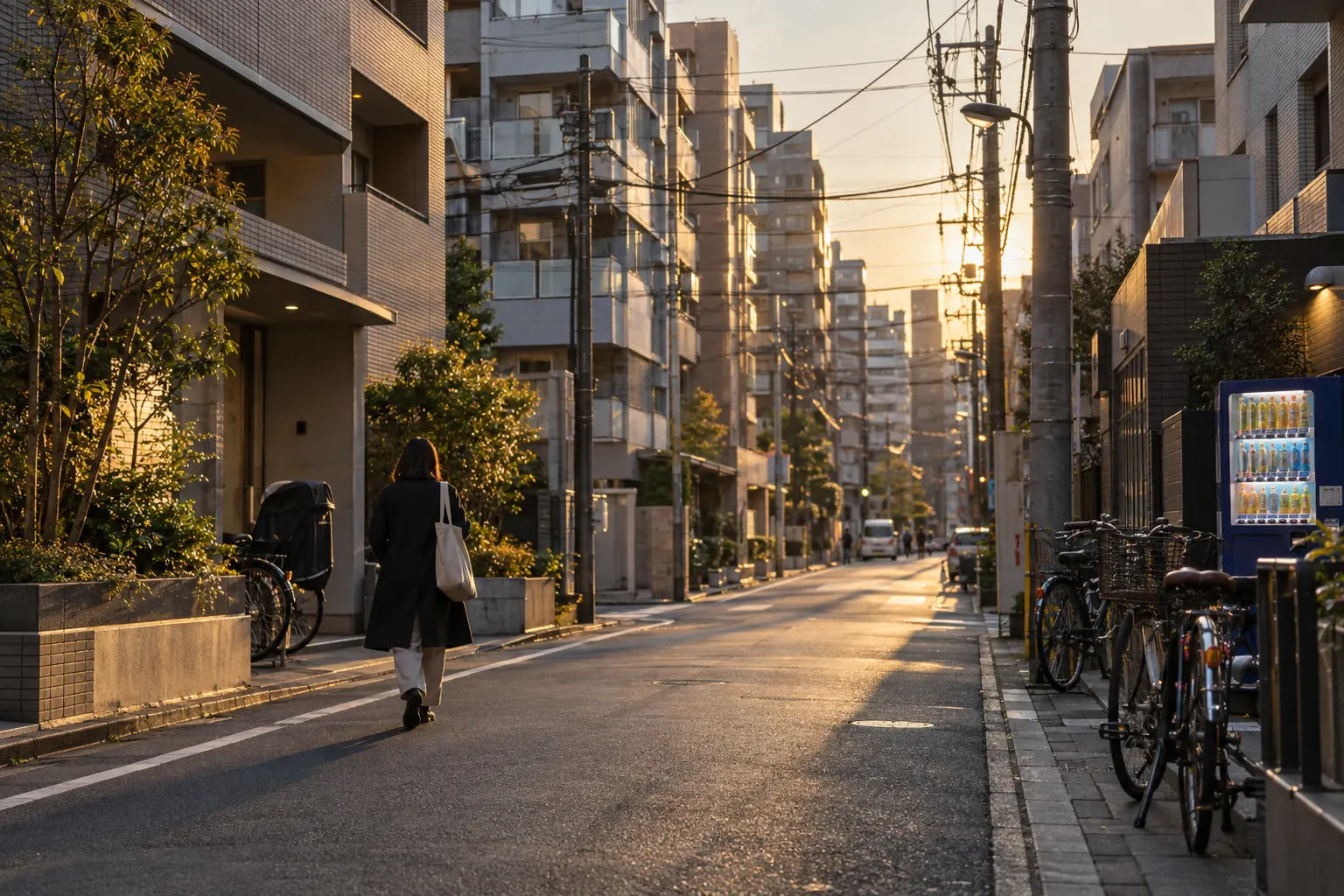
Japan experiences more earthquakes than almost any other country in the world, yet its buildings and infrastructure consistently demonstrate remarkable resilience. With several thousand isolated buildings, more than anywhere else, Japan has established itself as the global leader in earthquake protection technology and engineering practice. What can Turkey and other seismic regions learn from Japan's proven, multilayered approach to earthquake safety?
Japan's Evolution in Earthquake Engineering: From Crisis to Worldwide Leadership
Japan's mastery of earthquake engineering did not emerge overnight. It developed through painful lessons learned from destructive seismic events, rigorous scientific research, and a cultural commitment to disaster preparedness. The country sits on the Pacific Ring of Fire, experiencing about one in ten of the world's earthquakes. This demanding seismic environment transformed Japanese architecture and engineering into a living laboratory of earthquake resilience.
The 1995 Great Hanshin earthquake (Kobe earthquake), which measured Mw 6.9 (JMA magnitude 7.3) and killed 6,434 people, became a watershed moment. The quake exposed critical deficiencies in the existing 1981 New Seismic Design Code. Modern buildings designed under that code performed well, but structures built before 1981 and those with inadequate reinforcement collapsed. This tragedy galvanized Japan to develop the 2000 Building Standard Law revision, which represented the most comprehensive earthquake code upgrade in the nation's history.
Building Code Evolution: The 1981 and 2000 Milestones
Japan's 1981 New Seismic Design Code introduced the concept of "two level earthquake motion design." Buildings were required to resist minor earthquakes without damage and major earthquakes without collapse. This fundamental principle remains the foundation of modern seismic design worldwide.
However, the code was fundamentally revised in 2000 following the Kobe earthquake. The 2000 revision introduced several critical enhancements: significantly increased design acceleration levels, mandatory ductile detailing for reinforced concrete columns, improved connection design for steel structures, explicit provisions for nonstructural elements, and enhanced requirements for foundation design. The Architectural Institute of Japan (AIJ) standards integrated these changes to ensure comprehensive coverage of all building types and construction methods.
Under the current code, buildings in high seismic zones must be designed for severe horizontal acceleration demands. They must demonstrate both strength and ductility, the ability to absorb and dissipate earthquake energy without catastrophic failure. Every structural element must be detailed to ensure that plastic deformation occurs in controlled locations, preventing sudden brittle collapse.
Seismic Isolation (Menshin): Japan's Technological Breakthrough
Seismic isolation, known in Japanese as menshin, represents Japan's most significant contribution to global earthquake engineering. Rather than rigidly connecting buildings to the ground, isolation systems decouple the building from ground motion. Flexible elastomeric bearings (lead rubber bearings) or friction based systems (friction pendulum systems) sit between the building's superstructure and its foundation, allowing horizontal movement while supporting vertical loads.
Several thousand buildings in Japan now employ seismic isolation, more than anywhere else in the world, an adoption rate that reflects both technological confidence and economic necessity. These structures range from critical facilities like hospitals and emergency response centers to office buildings, residential condominiums, and data centers. The oldest isolation installations, now spanning four decades, have proven durability and effectiveness.
During the 2011 Tohoku earthquake (magnitude 9.1), numerous isolated buildings experienced minimal structural damage while neighboring nonisolated buildings suffered significant harm. Hospitals with isolation systems remained operational and undamaged, enabling them to immediately serve earthquake victims. This real world validation transformed seismic isolation from a premium technology into a standard safety measure.
Japan's isolation stock is predominantly elastomeric: natural rubber bearings paired with separate dampers, high damping rubber bearings (HDR), and lead rubber bearing (LRB) combinations. Sliding systems such as friction pendulum bearings are used alongside them. Which family suits a project is decided by the required period, displacement capacity and restoring behaviour rather than by a general ranking of the two. Both families cut the acceleration that reaches the superstructure, but by how much is a function of the isolation period, the damping and the ground motion at that site, so a single percentage does not travel between projects. Where instruments have recorded it, the effect is large: at the base isolated USC University Hospital in the 1994 Northridge earthquake the superstructure drift stayed at roughly a tenth of the allowable (Celebi, 1996).
Active and Tuned Damping Systems: Tokyo Skytree and Taipei 101
Beyond base isolation, Japan developed vibration control systems for tall structures where isolation is impractical. The 634 meter Tokyo Skytree is the best known example, and it is not base isolated.
The Skytree uses what its engineers call shinbashira-seishin, a core column vibration control system. A reinforced concrete shaft 8 meters in diameter and 375 meters tall runs up the center of the tower. It is tied to the steel frame up to 125 meters; above that it stands free, connected only through oil dampers. Because the shaft and the frame have different natural periods, they sway out of phase and cancel each other, cutting the tower response by up to half. The idea is borrowed from the central pillar of traditional Japanese pagodas.
The 101 story Taipei 101, though located in Taiwan (another high seismic region learning from Japan), stands as a global icon of damping technology. Its 660 ton tuned mass damper, positioned between the 87th and 92nd floors, has become one of the world's most visible earthquake engineering solutions, swinging against wind and seismic sway to reduce the tower's motion.
Earthquake Early Warning (EEW) System: Japan's Real Time Defense Network
Japan's Earthquake Early Warning (EEW) system, operated by the Japan Meteorological Agency (JMA), represents one of the world's most advanced rapid response networks. The system uses a dense network of seismometers and accelerometers to detect earthquakes within seconds of initiation and immediately issue alerts before strong shaking reaches population centers.
JMA typically issues warnings 3 to 5 seconds after earthquake detection. Since seismic waves travel at approximately 3 to 7 kilometers per second, this provides critical advance warning, typically 10 to 60 seconds, before potentially destructive shaking arrives at locations distant from the epicenter. For distant earthquakes, warnings reach communities 30 to 60 seconds before strong motion, allowing people to take protective actions and automated systems to implement safeguards.
When the EEW system issues an alert, railways automatically slow trains, elevators move to nearest floors and open doors, automated doors unlock, and warning sirens activate throughout affected communities. Individual smartphones and television broadcasts alert residents. Studies by the Japanese government indicate that even 3 to 5 seconds of advance warning can significantly reduce casualties by allowing people to take shelter, brace themselves, or move away from hazardous objects.
The JMA operates more than 1,000 seismic stations throughout Japan, creating the world's densest earthquake detection network. Advanced algorithms process data in real time, with detection and alert issuance occurring nearly instantaneously. While the system cannot prevent earthquakes or eliminate all damage, it provides precious seconds that have repeatedly saved lives.
Tsunami Warning Network and Real Time Structural Health Monitoring
Japan's tsunami warning system integrates with its earthquake detection network. Japan operates its own seafloor cabled observation networks, S-net along the Japan Trench and DONET off the Nankai Trough, which transmit real time data to JMA and enable authorities to issue tsunami warnings within minutes of offshore earthquakes. (The DART buoy system serves a similar purpose but is operated by NOAA in the United States.) This system, refined through tragic experiences including the 2004 Indian Ocean tsunami, has become a global model for coastal protection.
Modern buildings in Japan increasingly incorporate permanent monitoring systems that measure structural acceleration, displacement, and stress in real time. These systems enable engineers to assess damage immediately after earthquakes and make rapid decisions about building occupancy and repairs. Hospitals, emergency response centers, and critical infrastructure facilities use this data to confirm operational status and identify required maintenance before occupants return.
Smart materials and shape memory alloys are emerging in Japanese applications, offering self centering capabilities without permanent residual displacements. These materials, combined with traditional seismic isolation, provide damage control and rapid recovery, critical factors for lifeline buildings like hospitals.
Case Studies: Real World Performance in Major Earthquakes
2011 Tohoku Earthquake: The Magnitude 9.1 Test
The 2011 Tohoku earthquake (magnitude 9.1), Japan's largest recorded earthquake, subjected thousands of modern buildings to extreme ground motion. Isolated hospitals and office towers generally sustained minimal structural damage. The counterexample is instructive: the Sendai Mediatheque, a steel tube framed cultural building without base isolation, suffered ceiling collapses and stayed closed for months. Structural survival and continued operation are not the same thing.
1995 Kobe Earthquake: Before and After Code Changes
The 1995 Kobe earthquake killed 6,434 people. Damage estimates vary widely with methodology and with what is counted: the World Bank puts direct damage at about JPY 10 trillion, while NIST cites a total economic loss closer to 200 billion USD. Detailed surveys after the earthquake revealed that buildings designed under the 1981 code performed significantly better than structures built before 1981. However, even some buildings from the 1981 code era with inadequate detailing failed. This analysis directly informed the 2000 code revision. Building surveys in Kobe showed that buildings designed after 1981 performed far better than those designed before it in areas with severe ground motion.
Tokyo Skytree: Vibration Control at Height
Tokyo Skytree (634 meters, completed 2012) has recorded its response through multiple earthquakes since opening. The data has been used to verify the core column system rather than base isolation, and it illustrates a general point: above a certain height, isolating the base stops being the right tool, and the problem shifts to controlling the structure's own modes.
Community Preparedness and Cultural Integration
Japan's engineering excellence is complemented by perhaps its most powerful asset: a culture of earthquake preparedness. September 1st, Japan's National Disaster Prevention Day, commemorates the 1923 Great Kanto earthquake. On this date, entire organizations conduct earthquake drills. Schools teach children earthquake response from early grades. Every household maintains emergency supplies. This cultural commitment ensures that even when earthquakes strike, human behavior amplifies technological protections.
How Japan's Approach Applies to Other Seismic Regions
Building Code Strengthening: Turkey and other seismic regions should adopt design standards equivalent to Japan's 2000 code, requiring both strength and ductility verification. The code should mandate specific acceptance criteria for nonlinear analysis and demonstrate building performance under maximum probable earthquakes in the region.
Seismic Isolation for Critical Facilities: Hospitals, emergency response centers, water treatment plants, and power facilities should incorporate seismic isolation as standard practice. The cost, roughly a 10 to 15% increase in the structural shell cost (typically 5 to 10% of the total project), represents exceptional value given the importance of keeping these facilities working after an earthquake.
Early Warning System Infrastructure: Establishing a dense seismic network with real time processing enables early warning systems. Turkey's existing AFAD (Disaster and Emergency Management Authority) network could be enhanced with additional sensors and upgraded algorithms to provide EEW comparable to Japan's system.
Code Enforcement and Compliance Monitoring: A building code is effective only if enforced. Japan maintains rigorous inspection protocols and design review procedures. Third party structural engineers verify designs, and municipal authorities conduct construction inspections at critical phases. This systematic approach prevents the code from being circumvented through construction shortcuts or material substitution.
Public Awareness and Education: Japan's success depends partly on public demand for safer buildings. When citizens understand earthquake risks and available protection technologies, they pressure developers and policymakers to implement these measures. Public education campaigns, school programs, and annual drills create informed communities that value earthquake resistant construction.
Research and Continuous Improvement: Japan maintains world leading research through NIED (National Research Institute for Earth Science and Disaster Prevention) and university programs. Continuous research refines understanding of earthquake phenomena, validates new technologies, and develops improved design methods. This commitment ensures that practices evolve as scientific understanding advances.
The Economics of Earthquake Preparedness
Japan's investment in earthquake engineering and preparedness systems has proven remarkably cost effective. While individual seismic isolation installations represent capital expense, the reduction in earthquake caused damage, business interruption, and casualties far exceeds these costs. The 2011 Tohoku earthquake caused significant economic damage, yet the death toll was far lower than it would have been in a comparable earthquake striking Japan before 1981. Modern buildings proved resilient, limiting casualties despite the magnitude 9.1 earthquake's unprecedented scale.
Economic analysis by the Architectural Institute of Japan consistently demonstrates that earthquake resistant construction, despite higher initial costs, reduces lifetime costs through avoided damage and maintained property values. A hospital built with seismic isolation experiences minimal downtime following earthquakes, generating continued revenue and providing critical public services, values that far exceed the isolation system's cost.
Emerging Technologies and Future Directions
Japan continues advancing earthquake engineering through development of shape memory alloy dampers, viscoelastic dampers with temperature compensation, and advanced active control systems. Research into smart isolation systems that adapt stiffness based on seismic demand represents the next frontier. International collaboration, particularly through the Anti-Seismic Systems International Society (ASSISi) and research partnerships with universities worldwide, ensures that proven Japanese technologies rapidly disseminate globally.
Conclusion: Learning from the World's Most Earthquake Resistant Nation
Japan's approach to earthquake safety represents the most comprehensive, rigorously tested, and technologically advanced system in the world. Through evolution of building codes, widespread adoption of seismic isolation, implementation of early warning systems, integration of smart materials, community preparedness, and continuous research, Japan has transformed deadly earthquakes into manageable challenges. The 2011 magnitude 9.1 Tohoku earthquake, the largest earthquake Japan has experienced in recorded history, claimed far fewer lives than earthquakes of comparable magnitude did decades earlier, validating the effectiveness of Japan's multilayered approach.
For Turkey and other seismic regions, the path forward is clear: adopt comprehensive building codes equivalent to Japan's standards, mandate seismic isolation for critical facilities, establish early warning systems, enforce code compliance with rigorous inspection, educate the public about earthquake risks and available protections, and commit to continuous research and improvement. Japan's experience demonstrates that earthquakes are inevitable, but earthquake disasters are not.
Sources & References
- Otani, S. (2004). "Seismic-Resistant Design of Reinforced Concrete Buildings." Encyclopedia of Structural Engineering. Covers Japanese building code evolution and seismic design principles.
- Housner, G. W. (Chair) (1990). "Competing Against Time: Report to Governor Deukmejian on the 1989 Loma Prieta Earthquake." Governor's Board of Inquiry, State of California.
- NIED (National Research Institute for Earth Science and Disaster Prevention). Technical Reports on 2011 Tohoku Earthquake building performance and seismic isolation effectiveness.
- Japan Meteorological Agency (JMA). Earthquake Early Warning System technical documentation and operational guidelines. Real time earthquake detection and warning protocols.
- Architectural Institute of Japan (AIJ). Japanese Building Code Standards and Commentary. 2000 Building Standard Law revision specifications for earthquake resistant design.
- Japan Society of Seismic Isolation (JSSI). Database of isolated buildings in Japan with performance records and technical specifications.
- USGS Earthquake Hazards Program. Japan and Global Seismicity Data. Earthquake frequency statistics and Ring of Fire analysis.
- Turkish Disaster and Emergency Management Authority (AFAD). Damage assessment of the 2023 Kahramanmaraş earthquakes, comparing code compliant vs. noncompliant buildings.
Similar Articles
What is Seismic Isolation? The Science of Earthquake Protection
Learn how seismic isolation technology works to protect buildings from earthquakes: LRB and FPS isolator types, cost framing,...
Read articleIsolator TypesFriction Pendulum and Sliding Isolation Systems Explained
How friction pendulum bearings work, where sliding systems outperform elastomeric ones, and the design variables that drive...
Read articleComprehensive GuideComplete Guide to Seismic Isolation (2026)
The ultimate guide to seismic isolation in 2026. Learn about isolator types, physics, costs, design codes, retrofitting, and...
Read article